
 Login / Signup
Level 4 vs. Level 5 Drywall: Finishes, Mechanics, and Situational Triggers
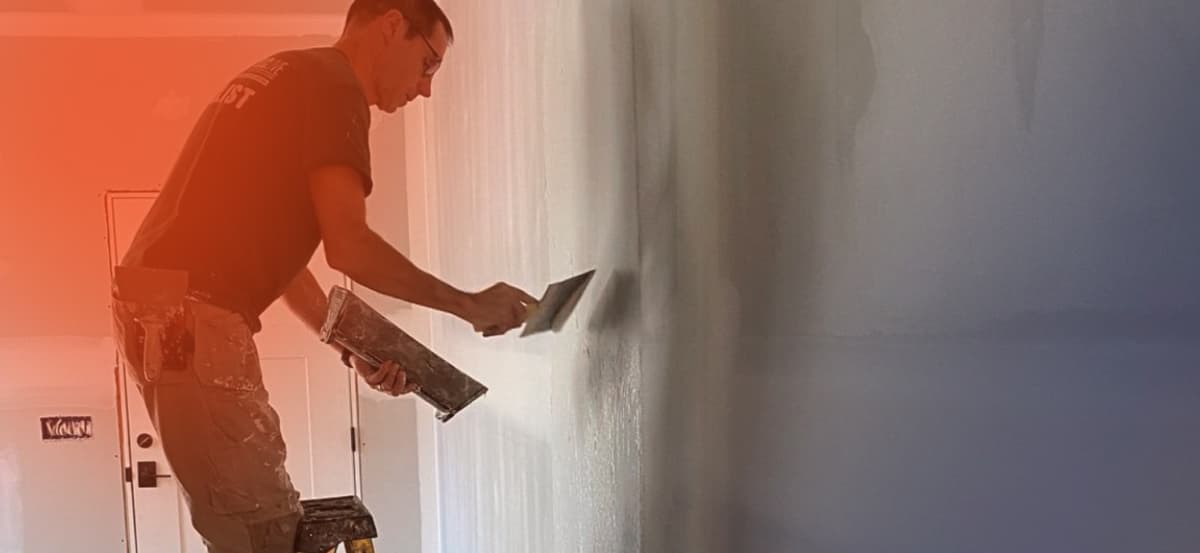
Aug 13, 2026
Level 4 vs. Level 5 Drywall: Finishes, Mechanics, and Situational Triggers
Why "smooth" sometimes isn't an opinion, and the boundaries that make a true skim coat non-negotiable.
By Michael Alarcon
If you’re reading a set of interior finishing blueprints, you’ll almost always see a specific drywall finishing level designated for each room. While the Gypsum Association outlines 6 distinct levels (0 through 5), the vast majority of commercial and high-end residential work focuses on the transition between Level 4 and Level 5. Both levels are sanded, both are smooth to the touch, and both look identical under standard overhead construction lighting. That said, they perform completely differently once paint hits the wall. Understanding the physical differences between these two finishes and the specific lighting and architectural situations that dictate each is the key to ensuring an interior wall behaves exactly as intended.
■ The Base Tier: Level 4
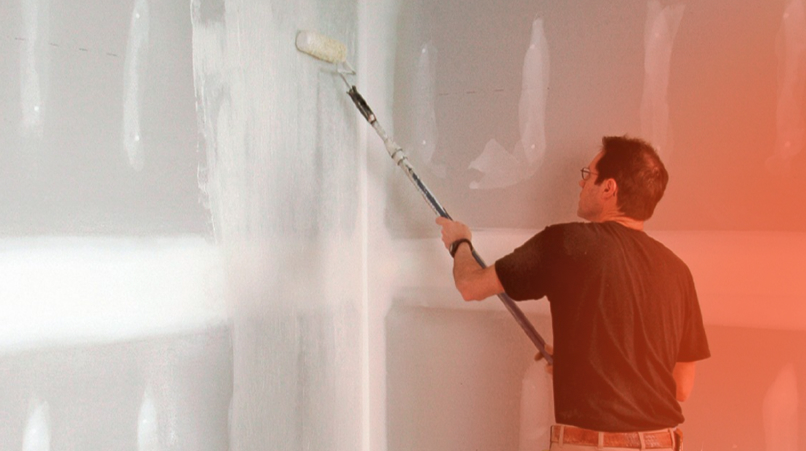
Level 4 is the standard workhorse of North American construction. According to the GA-214 standards, a Level 4 finish requires tape embedded in joint compound over all seams, followed by two separate, distinct coats of mud over all joints, angles, and fastener heads. The entire assembly is then sanded smooth to form a flat plane.
The Material Composition: At this stage, the wall surface is a composite of two completely different materials: raw gypsum face paper and dense, treated joint compound.
The Porosity Deficit: Drywall face paper is highly porous and acts like a sponge, drinking paint down rapidly. Joint compound, once cured, is dense, tight, and highly sealed. When a painter rolls a coat of primer or paint across a Level 4 wall, the paint film dries, shrinks, and cures at two entirely different rates across those distinct surfaces. Under normal conditions, this mapping effect (known as joint banding or telegraphing) is completely invisible.
Where Level 4 is Preferred:
-
Matte and Flat Sheens: Rooms where the paint schedule strictly calls for flat, matte, or low-sheen eggshell finishes. These paints contain high levels of pigment particles that scatter light rather than reflecting it, naturally masking the material variations underneath.
-
Heavy Wallcoverings: Spaces slated for textured wallpapers, heavy commercial vinyl, or wood paneling, where the substrate is completely buried beneath a thick decorative layer.
-
Standard Diffused Lighting: Areas with typical residential fixtures where light drops downward from the center of the ceiling rather than washing across the face of the wall.
■ The Premium Tier: Level 5
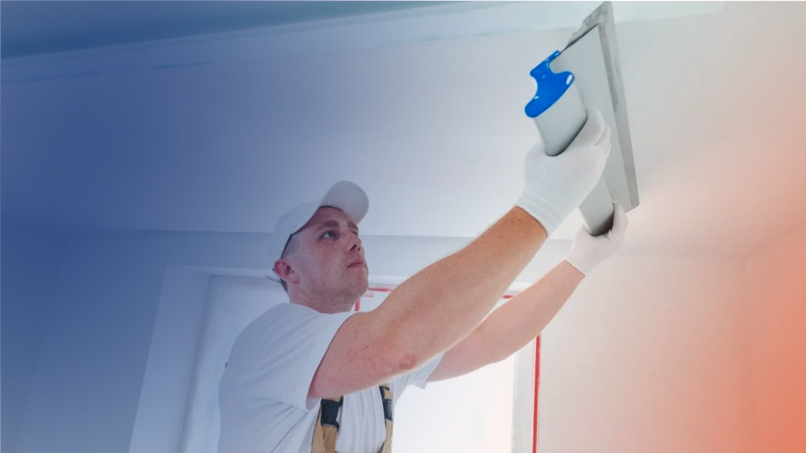
A Level 5 finish takes the exact same three-coat Level 4 base and adds a final, crucial step: a continuous, ultra-thin skim coat of joint compound applied across every square inch of the wall and ceiling surface. This skim coat can be applied manually with a trowel, rolled on with a thick nap roller and wiped flat, or sprayed on with a high-pressure airless rig.
Equalizing the Substrate: The goal of a Level 5 skim coat is not to flatten a crooked wall framing job; it’s to equalize the absorption rate. By skinning the entire surface with a micro-layer of mud, you hide the raw face paper completely.
The Paint Reaction: When paint is applied to a true Level 5 surface, the suction is perfectly uniform from corner to corner. The paint film dries at an identical rate across the entire wall, completely eliminating flashing, ghosting, or the outline of joint transitions.
Where Level 5 is Non-Negotiable:
-
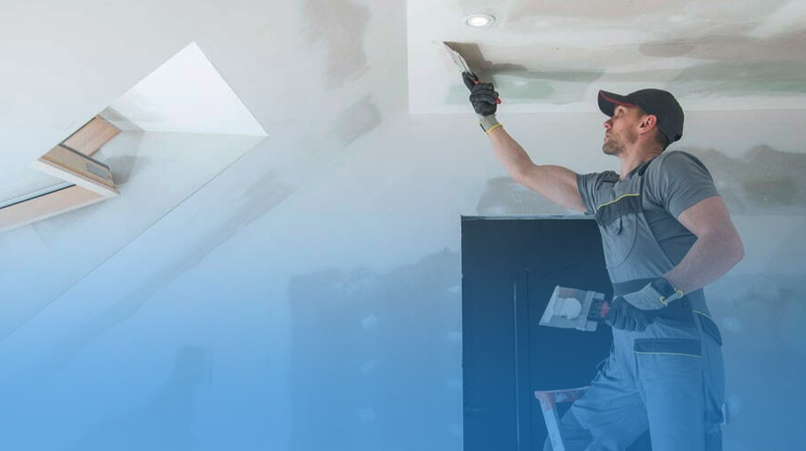
Critical, Glancing Light: This occurs whenever large floor-to-ceiling windows, deep skylights, or recessed ceiling fixtures (wall-wash lighting) are placed directly adjacent to a wall. When light rays hit a wall at a sharp, parallel angle, they graze the surface horizontally. This casts micro-shadows over the tiniest variations in paper texture and mud transitions, turning a Level 4 wall into a map of visible joints.
-
High-Gloss or Dark, Saturated Colors: Satin, semi-gloss, and high-gloss enamels behave like a mirror. They reflect light directly back into the room, magnifying any difference in texture between face paper and joint compound. Darker paint pigments compound this effect by creating high-contrast shadows over minor imperfections.
-
Minimalist Architecture: Modern architectural designs that strip away traditional baseboards, door casings, and crown moldings leave the drywall completely exposed. Without trim to break up the field of vision, the wall must act as a single, flawless monolith from floor to ceiling.
■ The Bottom Line: Matching Mechanics to Environment Ultimately, choosing between Level 4 and Level 5 comes down to a strict calculation of light and paint chemistry. Level 4 offers a highly effective, cost-efficient substrate for standard living spaces wrapped in forgiving, low-sheen paints. But the moment an architectural design introduces harsh glancing light, modern trimless details, or deep gloss sheens, physics demands a Level 5 skim coat to provide a uniform canvas that can handle the exposure. Connect with the FBM Digital Team now to determine whichlevel your job needs and what materials you’ll need to get the job done.